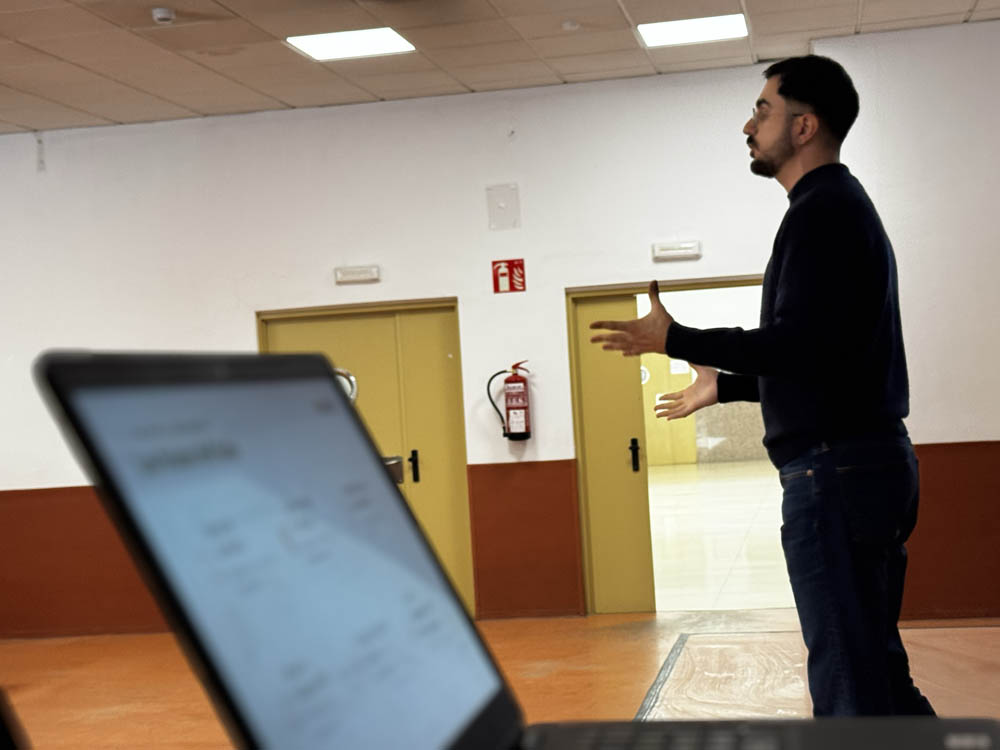
The POWER project engaged university students in a hands-on workshop combining social media analysis, fact-checking and AI-assisted storytelling to strengthen critical thinking and resilience against environmental disinformation.
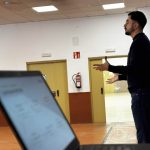
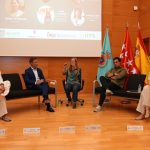
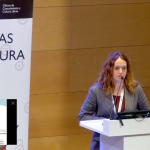
On 21 October 2026, the European project POWER participated in the 4th Sustainability Conference of the School of Experimental Sciences and Technology (ESCET) at Universidad Rey Juan Carlos (URJC), Spain, through the interactive workshop “Sustainability and Fake News: Separating Facts from Opinions.”
Led by Manuel Gértrudix and Albert Rodríguez from the Ciberimaginario Research Group (URJC), the activity introduced students to the mechanisms through which misleading narratives about sustainability and clean energy spread across digital platforms and everyday conversations.
From research evidence to critical thinking
Under the title “Your Voice in the Group”, the workshop explored how disinformation can circulate within trusted social environments, including family and friendship groups, where misleading messages are often shared without verification.
The session drew on POWER’s research into online disinformation surrounding the major electricity blackout in Spain on 28 April 2025. Using findings from an analysis of more than 1.44 million social media mentions, participants explored how an unexpected event can be exploited to amplify distrust, conspiracy narratives and misleading claims about renewable energy.
Students were also introduced to social listening approaches for examining online conversations about emerging and controversial sustainability topics, including electric vehicles, nuclear energy, artificial intelligence, bioplastics and carbon capture.
Turning fact-checking into creative counter-narratives
The workshop moved beyond identifying misleading information to explore how young people can actively respond to it.
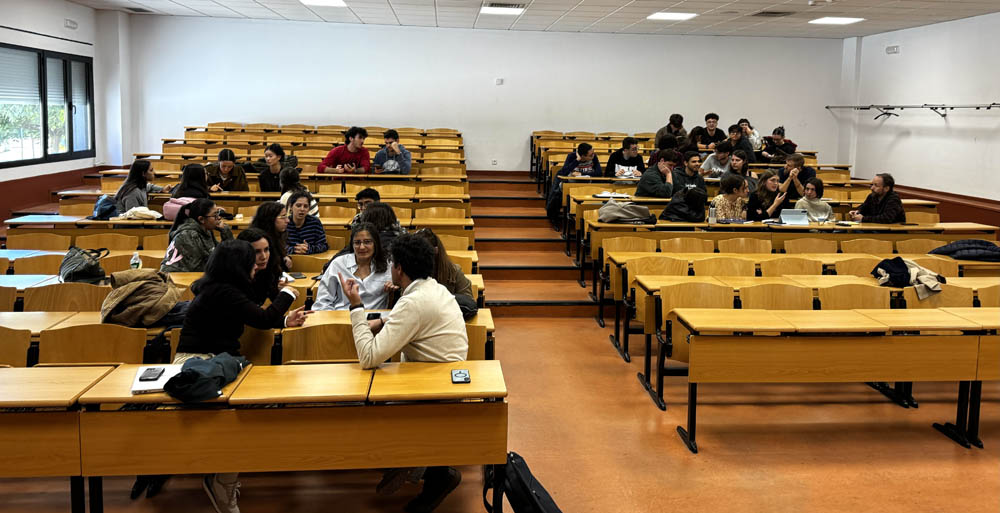
Working collaboratively, participants examined examples of environmental disinformation, identified questionable claims and considered how scientific evidence and reliable sources could be used to challenge misleading narratives.
They then used Ciberimaginario Play, an AI-assisted collaborative storytelling tool, to develop short digital comics depicting everyday situations in which misleading information is shared and critically questioned.
This creative approach encouraged participants to translate fact-checking into accessible narratives, emphasising constructive dialogue rather than confrontation.
The activity highlighted a central principle of effective counter-disinformation communication: building resilience is not simply about correcting false claims, but about empowering people to question information, evaluate evidence and make informed decisions.
Connecting POWER research, education and public engagement
The workshop illustrates how POWER’s research findings can be translated into participatory educational experiences that strengthen clean energy literacy and critical thinking.
By combining evidence-based analysis, collaborative learning and digital storytelling, the activity contributed to the project’s wider mission of preventing the weaponisation of clean energy debates and supporting informed public participation in the energy transition.
It also provided an opportunity to explore creative approaches to counter-narrative development, a key dimension of POWER’s ongoing educational and communication activities.
These approaches are closely aligned with the project’s forthcoming Clean Energy Living Labs, scheduled for 2027, where participants will work collaboratively to deconstruct disinformation narratives and develop evidence-based responses.
Through initiatives such as this workshop, POWER continues to connect research, education and public engagement, helping young audiences become more critical, informed and active participants in conversations about a sustainable energy future.
Explore the workshop: Your Voice in the Group – Interactive Presentation